
Episode transcript
Correct.
A popular suburb is also not the best investment and that's where we arrived at the five locations which we arrived in and we are able to come back and say okay these are the places where you should not be investing in now right.
True.
Let's go in. Let's get in. Let's get in okay so first one first of the chopping block we're talking of Caulfield East today.
Yeah.
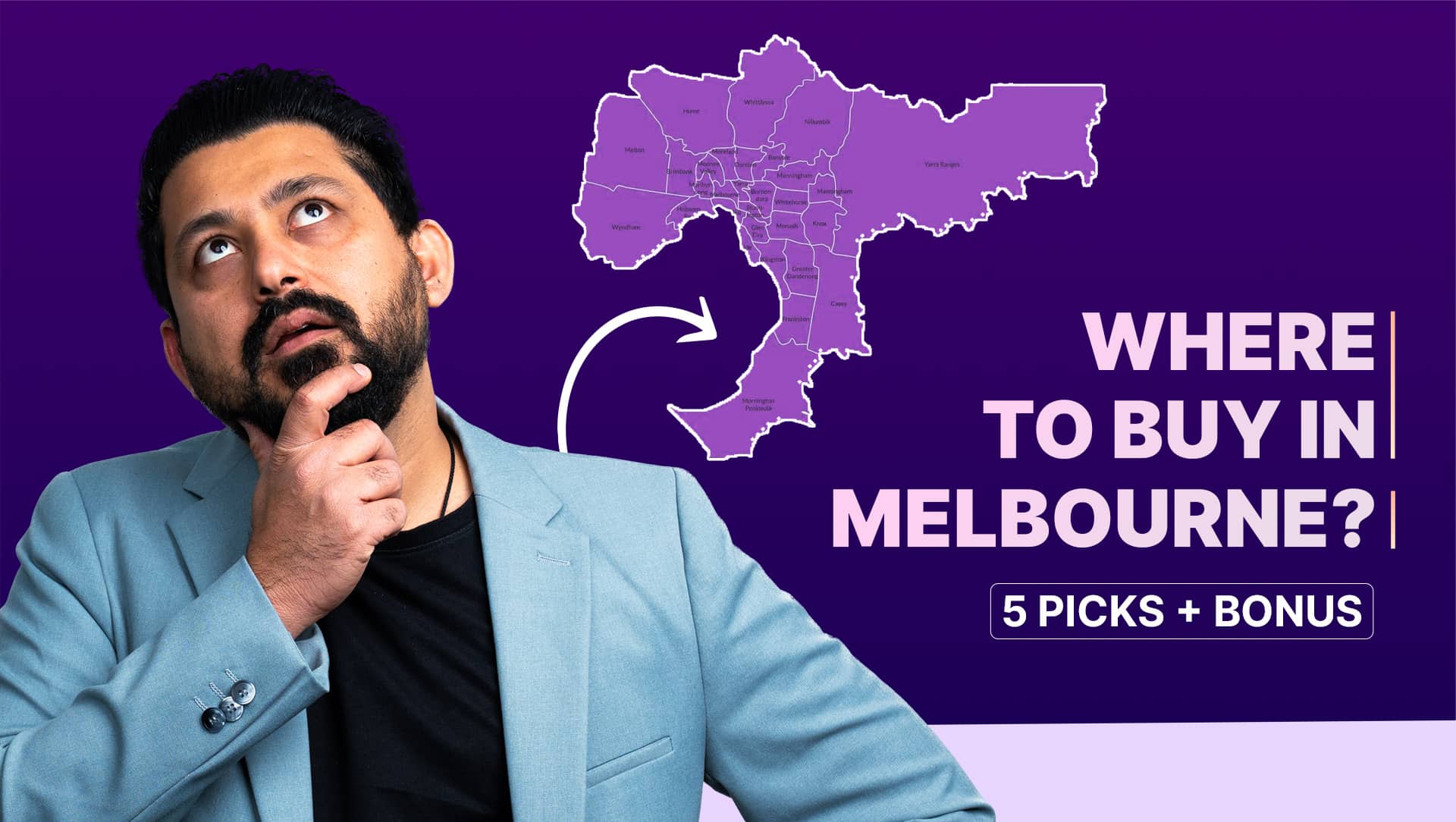
We're talking of Caulfield East because you know though it's it's it's pretty just about 10-ish kilometers of Melbourne CBD. But the reason why it's off our list is because it's nice. So there's a train station out there. There's Monash University campus is there. So what can go wrong? But it's heavily student focused, high density, small apartments everywhere. If you're buying as an investor or if you're buying as a first-room buyer or an owner-occupied, you're buying a very, very small airspace or something you know with zero land content you know you get huge capital depreciation and the demographic is so student dependent that for somebody else who's not a student it's not a great lifestyle it's not a great option to invest into. And that's the worrisome part about coffee. It's okay, it's nice. You get a lot of amenities all around. You get a lot of cafes and you've got a lot of nice places all around. But if I'm investing, if I'm buying, these things can make it into an avoid list. I don't want to be there. What do you think in terms of how the market is Julius? Market is OK show there. So basically, if you look at the current median prices are close to high nines, but sales volume is less. So there's not highly they don't have a lot of sales volume in housing. When you look at the units, units are in between 335 to $350,000. Yeah, you can get into that kind of thing. But they are like very small size apartments, like match boxes. And when you look at the gross rental yield, it can go up to 6.1%. So in between 5 and up to 6.1%, but that's a gross. But then you have to include all the strata cost and all the stuff. The net is pretty low. And it's highly inflated by students. So it's all investor driven demand. That is also seasonal, highly seasonal. Sometimes your vacancies are close to 1.5%. Sometimes you have 4% to 5% vacancies. That means for months, your unit will be empty. Oh, that's not great because then if you have such a large vacancy rate, you don't like it, right? No, and then it's not good for the investors. Number three is basically when you look at days on market, it takes more than 300 days to sell property. That's about a year to sell a property. That's about a year. That's very bad. When you look at the capital growth perspective, market have been crashed there. It's around minus 30% over the last few years. So that means prices are not growing. They're declining. And then amount of supply, excess supply, which is coming up in that particular location is tremendously high. That's always going to put stress on anyone who's wanting to invest into that area or even wanting to buy to live in, right? You are correct because to live in, yes, probably it's a good location because you are renting there. But for investment, when you say investor, look for good capital growth. This is heavily invested demand. heavily invested proportion area where you can see a lot of student dependencies plus it takes a lot of time to sell the property. So yields are okay but your net yields are not great plus where sometimes the vacancies will be too high. So you lose a lot on your rental income. Plus when you look at the long-term average of the capital growth versus the current what's happening, you are actually declining in the capital growth. That means your property prices are degrading. That's not a great thing to have it. That's not a great thing to have and then that's that always will whatever you say you it looks to be living nice but it looks to be living great but you don't like that and that's what a biggest risk I think that's a good big risk which you pointed out and buyers need to understand that risk that okay there is an oversaturation and oversupply of small one-bedroom student units or one-bedroom apartments or something which again There's a restriction on lending. On the loan side, banks would not be lending it or they would be saying, okay, I'll give you, you put 30%, 40%, all that kind of a deposit which makes it tougher for someone to buy. Then again, no owner occupied will be wanting to be there. So, you are always at the mercy of tenants and coming in, going out, students coming in, going out, high turnover, then with high turnover comes high letting fees as well because that is what you pay to the property manager. There will be vacancy rates and then you are buying such a small apartment, there is practically zero land value. It is highly transient location. Very, very transient location. And the rents are, 6% is not a phenomenally high rental return that you can say, OK, I'm getting a 10%, 12% rental return, but that risk is taken care of. I'm not even getting that. I'm getting a 6% return, which I can, even if I sacrifice half a percent somewhere here and there, I'll find a lot of better locations. But still, why do you think people still buy there, right? People are still buying this. Yeah, because it's kind of, yeah. affordable location plus the location wise it's around 10 kilometer in a CBD. So it's like highly sort of the location. Second thing is a lot of investors when they look for a property sometimes they only look for a gross rental yield which looks on paper more than 6%. But when you look at their net rental yields because of the strata, excess levies and all the other cost it would be very close to 3 to 3 and a half percent. But when you buy that property on paper, it's 6%. Third thing is there is a lot of marketing activity around off-the-plan apartments. And they spend a lot of money on marketing, so it's always in the media. marketing around it so a lot of investors are actually put it towards looking at that location and that's how it is built. You get a bit you get a bit carried away with it you get you think okay this is going to be nice you believe that this is not going to happen to me it happened to somebody else because they didn't know maybe I know a bit better or you just do name you just do your sentence you don't understand what you're going to be and that's why I think even if you if you're a first home buyer you should really think because If I am a first-term buyer, this was stepping stone but I still do not want to give away on that bit of an income because if it is a stepping stone, I want to upgrade in some years and I want to do something better in some years. So, maybe I want to use that equity and invest or something but I am going to miss out because I will never get a capital growth and I will never make that capital so that I can get a better property later on. And as even an investor, you know, if I'm an investor who's wanting to have capital growth, which most investors would want to, I'm finding that my money is so idle. I would not be able to get any bit out of it. So it doesn't even stop. It doesn't even stick to this property. It actually spoils my things which I'm planning out for the next ones as well. It just finishes off all my plans and all my strategies. It puts them into a toss. But okay, let me ask you a couple of questions on this. That if you today, if you had in today's budget, okay, the budget which you are having that property in this kind of properties which you can get there, what do you buy here? Absolutely no, rather I would buy in a neighboring suburb called Carnegie and because in Cofield East you're not buying larger piece of land and houses, so your more demand is towards the units. But when you jump one or two suburbs and going towards Carnegie or Amurumbinad, then You would still buy small villas or units where the land parcel is little bit higher. So that means they are well-established 1970s small units of villas because you are exactly in a CBD region where you are actually holding around two, three hundred square meter land rather than buying a small apartment in Kani. Yeah, so you say that the other suburbs, that's what they offer, right? They offer a little bit of better land size as per the location. Location-wise, they are both similar, but rather you'll find the land over there. They are older houses, but you still find the land which will have a better value in future. It will have a better value. It will give you growth in that in the future. Obviously, it's much better rather than buying such a small apartment, very small tiny studio apartment or something, one bedroom apartment in Coughfield versus there. That's a very fair point and I think that's a good way to analyze what a suburb is. It's a good suburb where if you're a tenant, you'd love to live there. It's so close to the city, so close, easy to travel there, 10 minutes in the CBD. It's above as per the location but it's not good for the investment. Not good for an investor or even an owner-occupier. If you're invested, you're invested but then you can have better choices out there like you just suggested. Okay, let's jump on to our second suburb and this is a nice suburb to go. It would be a nice suburb to drive around and that's the patch, you know. It's a beautiful suburb. It's in the Dandenong ranges, you know, maybe what about 40 kilometers from CBD or something. The good part about this suburb is all the greenery and the acreage and the peace all around it. But the problem is holding costs. The problem is council overlays which are too much out there, bushfire exposure. Then being a half rural kind of an area, the resale times is very, very long. It's an illiquid kind of a property which you get into. And that is what troubles that area, right? What do you say, Julius? What's the market out there in Patch? It's early sort of the lifestyle kind of location where it's not for the investment. So if you look at the market reality now, The median prices are close to $800,000. But sales volumes are very low, around 10 to 12 sales a year. So when you look at the units-wise, there's no units. So that's why we don't have the data. Rental yields are very poor. So you still spend $800,000 to $900,000 per property. It's very hard to find tenant first. And number two is basically, it's in between 3% and 4%. 3% to 3.5% gross. But then you need to maintain bigger yards. So basically, there's a lot of maintenance cost. Vacances are low because they have a tiny rental pool but the tenant demand is also extremely lower because they are not the easy property to maintain as well. When you look at the liquidity score from days on market side, in between 60 to 90 days, it takes around three months to sell the property. And growth pattern is unpredictable. It's highly dependent on what kind of property you have versus what are your properties feature. Because the buyers which you'll find there are kind of those who are looking for a lifestyle properties. So they are really emotional about it. So your property has a lot of these type of features. Then probably you can see the property will have a good growth or its growth will be flat. It can remain there for a longer time. And if you look at the entire performance side of the suburb, then it's a highly high maintenance cost suburb. So your contour is not flat. So you need to have retaining walls, which is very, very hard to maintain after a few years. Then you don't have a services. So basically CO is not there, so you have to maintain a septic tank. Because it's a lush green, you have to maintain all the vegetation, tree management. So it's like high maintenance, high holding cost kind of suburb. Then the insurance premiums would also be pretty high out there. Because of the bushfire load list. Oh, yeah, correct. So that makes it that unless I'm really in love with nature and I'm not investing, I'm just going there for a lifestyle, like you rightly said, I may be thinking, OK, I'm fine with it. But all the other ancillaries or the things which are coming along with it, you know, the bushfire, which is which the bail ratings can really take your premium somewhere else. It can really, really increase your premiums. The bushfire overlay will kill it there. slopes which you rightly said because of the contour of the area that's tough to maintain and it's tough to maintain the retaining walls they start having cracks and larger cracks which you can see very clearly and looks ugly and then you obviously have to maintain them as well and it's it doesn't make it doesn't even and it's not that I have a large land so I have a benefiting it with it and I'm going to subdivide and make it smaller lots and so that's not allowed as well so I can't that land is big But it's not of too much of a use and definitely I agree with you. If you have such kind of an area, then the buyer pool will be pretty limited. Everyone won't be wanting to buy there and that will make it tough to be able to sell it. someone should be okay with all of these things because when nowadays people when they come most of the time people will come with they'll they'll have a knowledge they will they would have read through it they would talk they will ask questions they will search on Google's they'll search on internet so they will know okay I am buying into a semi-ruralish area but I am buying there where I will have to put maintenance into it, but I love larger lands and I love to have a walk around, a bigger thing, then it's fine. But if I'm not that kind of a person, which not everyone is, we're living in a busy lifestyle now, but then it's not something, it's a pretty niche kind of people who will want to buy there, right? But still people are buying. Still people are buying. Yeah, it's true because of the two main reasons, those who are looking for a tranquility. So tranquility score is 10 out of 10. Yeah, plus those who would like to go with the lifestyle blocks. So that's one of the emotional angles. Second thing is they have a pretty good neighboring suburb called Olinda, where if the buyers are pricing out of those suburbs, then they try to upgrade into this suburb. And then we could see there are a lot of emotional kind of buyings happening into that area. Because there are a lot of people, okay, I come to Australia, I need a bigger land, and then I would like to go and live on a place like Acreages, where I can have my farm animals and all those stuff. People buy like this. So when you have this type of expectations, then this is the right support for you. That's absolutely right. So yeah, you're a very different buyer when you wanting to buy there. That's not the kind of an area where you would love to buy because not everyone would love to buy there. And that's always there. And that's why, you know, if I'm an investor, it's not my place. It's not my place because I anyways won't get tenants who are going to maintain such large areas and tenants don't maintain that as well. So either my tenancy agreement will include that I will maintain it for them then I may still be able to lease it off otherwise it's tough to lease off or your tenant should be someone who really loves that kind of an area but then you're not going to get that higher rent yield out of it as well. And then if I think that this is my forever property and this is the lifestyle I love, that's fine. But if that's not, if it's a stepping stone, it's not liquid as well. It's not for us, right? So again, I'll ask you the same question which I asked when we were talking about coffee. Would you buy? Absolutely no, because there are better suburbs nearby. I might go to Ringwood East or Murulbach. They have a better proposition because they have a train line access because your accessibility is very important to travel. For one or two days when you drive, everything is green, it's fine. But when you travel from home to your office and then it takes more than two hours with the jam road, then you don't want it. Plus bushfire risk, your insurance risk is higher and They have a lot of owner-occupied demand, but you won't see much activities around it. So if I would be, if I'm an investor, and then if I would like to get into this type of suburb, or if I want to maintain this type of things, then probably I would look for a large flat block, flat lands with the, it would be scenic, but should have a good infrastructure around it. should have good infrastructure around it. Okay, that's right. Yeah, so unless I am a kind of a person who really, really loves that kind of a lifestyle, it's a different thing altogether. But yeah, most of the people, if you are going to the office, if you're traveling for work, if you have to go out, It's a different world now. It's not so easy to do that. You can follow your dreams. I suppose Covid got us a chance to follow our dreams where we could work out of home and not go anywhere and enjoy our life. But I think it's back to the hustle and bustle now. Most of the companies want you to be in the office two or three days a week and then it's a pain to do all that kind of things. I'll put it in the safe. If I have to drive more than 15 minutes for my groceries, I don't want to go there. You need to have infrastructure around, you need to have connectivity. You need to have connectivity and then you like to see people around, you like to talk to people, your kids would like to, I know they would love to walk in a nicer area but they would also like talk to people and socialize around and then you can have opportunities for them to play and then you would not wanting to keep on running from the office, driving to and fro maybe one hour, one and a half hours, two hours is not my piece of cake. Okay, let's jump into our next location. We've got the two coffees, which is apartment-based. We've got the nice location, which is the patch. But then let's jump into the other side, the city of Melton. Let's talk about Rockbank. Rockbank, now, that's on the western side of Melbourne CBD, same 30-ish kilometers like we were just talking about. It looks like a good entry point. You can get a brand new house out there, good master plan areas, closer to a train station. But the problem with that suburb is it's surrounded by so much of paddocks. which are getting subdivided and cut and there is endless supply of land for hundreds of acres of land which means that you will find that if I own a property there, There's one coming up, maybe every hour, somewhere, you know, every day a new apartment, a new house is coming somewhere or the other, some house line package is being sold, right? And that's a different thing altogether. When you look at the market in what's happening in Rockbank, what do you see as a market reality out there? Yeah, it's pretty okay-ish, like it's highly oversupplied suburb, where the median houses are still 630k, where we can still buy a 4x2 bar double garage close to 350 to 400 square meter land, still at 630,000 units, very, very low in volumes, but they are still at around $515,000. So, when you look at the gross yields at around 630,000 steel at around 4 to 4.5%, still okay. But because of the supply risk, the vacancy rates are close to 3.5%. That means it will take at least 6 to 8 weeks to rent your house. And for a selling side, days and markets are close to 65 to 70 days. That means more than two months easily to sell your house. And compound five years growth, when you look at the five years compound growth, it's very close to 1.4%. Very poor growth. Very poor growth. That's even below inflation, right? Below inflation, yeah. So that's mainly because oversupply there's a lot of land coming up. And construction costs have gone up a little bit, but land prices are not going up. So when you see you have a house which is already there in the market, which is around two to three years old. In next expense, you'll see 50 more houses coming up and at the similar price, which is brand new. So there's a lot of competition for the houses. That means you have a lot of houses coming up, a lot of vacancies, extremely oversupplied. Yeah, absolutely right. If I want to sell my house and somebody's going to come into my open home and they're going to say, Hey, Paragiana, your house looks nice, but I'm getting a brand new one. Why should I buy a four year old, three year old, five year old house? And I get a brand new and I can make it my own way. I don't know if they can do that. you can get a custom builder and you can make it your own way and it's a similar cost. So you say, okay, I'll make it my way. I don't want to take your way into it. I don't want to take an existing property. I'll go there. I'll have my stuff. I'll do it in my own thing. I don't know what you've done, but I want to do things which suit me. And then that's it. The only thing what you can do is, okay, cut down on the price or just let the property be in the market for a long, long period of time. And that impacts your capital growth. That's a huge risk which I'm taking out there. The unlimited land supply is a huge risk. Because like you rightly said, if there's unlimited land supply, then there is no land growth. And if the land prices don't grow, then you're not growing at all. And this is the problem. This cookie-cutter flow plans for all the houses make them all look identical. If you are in the air and if you're flying over that, you will find every house to be similar. Now, what's different? Why should your house have anything niche into it? And on top of it, you know, infrastructure will lag out there. You know, there's schools and the medical centers and the amenities are just struggling to keep up with the homeland packages. We just keep on coming, keep on coming in smaller land sizes and they just keep on being spread across. And so many investors, interstate investors, first time investors are flooding that area.
Yeah.
And that's that. And that with. Because if I'm a tenant as well, look at me. Look at me on the other side. If I'm a tenant, I say, OK, I have lived in this house. This is new. OK, there is a problem which is coming. There's a plumbing issue which is coming. Let me go to two streets on the line. There's another new house which has come in. I'll get into a new property. Rental turnover is also jumping up out there. And that's killing the vacancy rates. It may become good now. It may become bad tomorrow. And that's such an issue. And there is still, and that's a known issue, but still, You know, there are still some people buying there, right? There are still some people buying out there. Why do people buy there? You know, it's always... Because it's affordable and then there are a lot of first-on-buyer grants and a lot of developers are offering incentives because the land is cheap. Whenever they would have bought that land, cheap subdivision is also not too expensive because it's a flat contour. So basically, when they sell land in bulk, they offer a lot of incentives. So that look attractive for a lot of people. Second thing is, since 2018 I am hearing about the Rockbank train station, which is yet to come. But it's highly market sized and then that's why a lot of people are just carried away because of the new train station. Number three is the FOMO. So a lot of investors or owner-occupiers, those who are pricing out from Sunshine or Caroline spring, they come to Rockbank. Yeah, you think that, okay, I'm missing out there. Those are good established, good, nice to let me go there. What can I, what can I go wrong? But lots of stuff is going wrong there. And that's the jump. You jump is pretty easy. You think that my jump is affordable. You think that my jump is good, but You're jumping to a much worse position out there and that is why as an investor, I think I would always think twice. This is a big red flag for me. There's an endless land supply, big red flag for me because that is going to kill my capital appreciation, whatever happens. However good or bad the nice the suburb may look like. But if it is going to be like this, I'm not going to make money. Even if I'm a first-room buyer, even if I'm looking at an equity growth and then I want to move to the other side and buy a larger house or something like that. And I'm in for a flat or a negative equity maybe in for the next five years or something. And that kills my whole objective. of buying a brand new property, of buying a newer house, one I've gone so far out, so far away from the CBD, then I'm finding that I'm surrounded by houses which are like Lego houses, which are exactly like what it is. And then, you know, you're not getting capital growth as well. You start thinking, what did I do there? Why did I buy there, right? But my question again, Julius, back to the question which I'm asking for all the suburbs. Would you buy, if not, what would you do? I would not buy here. Instead, I'll buy in Adir or St Albans. In these suburbs, basically, yes, they are old suburbs, but they are landlocked. So basically, they are surrounded by a lot of other suburbs where still there is affordability. Still I can buy a good house with a good block size for around $7,800,000. And then in future, because of their proximity to the city, I'll still have a good subdivision opportunities. So, rather than buying into Rockbank where supply is always a concern, then highly-developable land with higher vacancies is always a concern. My pick would be this to suburb because they are still affordable, they still have good rental yields, not as bad as others, but still. Maria landlocked and then I can make more money than investing into Rockbank. And what kind of property would you buy, say in an RDR or say? It would be basically because since the proximity to city, there are a lot of old houses with good land sizes. So basically land sizes are in between 700 to 900 square meter. All right. There are a lot of subdivision opportunities. So if you avoid fewer lists, then probably yes. Any good house with more than 700 square meter land, a livable house, it's good to get in. Yeah, cool. Because we are in those suburbs are landlocked. So there is no more land coming in there. So there's no land growth is going to be there. And then you have a sitting on a larger land, you have an opportunity tomorrow to subdivide and do some investment or even if you want to live in and you can renovate and live in into a closer area. For investors, all these factors like landscape cities are number one. Because of the landscape city, the high capital growth is pretty good. Yields are always better. Then vacancies are lower. And then you can manufacture the equity from your land after a few years. After a few years. And that gives you a much better opportunity as an owner, occupier, as an investor. And you're not too far off from the prices as well. You're not dramatically off from the prices from what you're getting in parameters versus what you do. There are affordable locations, but much better than Much better than one. Yeah, correct. Okay, let's jump into our next one.
That's Broadmeadows.
Okay, now we're going out of north, right?
Yeah.
We're going there and that's again similar. That's closer actually to Melbourne city. That's about 15-16 kilometers from the CBD. It's not too far off. It's got the train line of the shopping center and but the biggest problem are the Melbourne airport overlays.
Yeah.
which kills it. You know, the income profile of people who, the socio-economic profile of the people who live there, that kind of kills it. That there is a huge subdivision, don't get me wrong, there's a huge subdivision activity happening there. But with the socio-economy and the airport overlay, it's a nightmare right now. So, do you see that in the market reality there? Yeah, so from last few months, actually last year it was in a lot of investors forum, people were investing there. So, when you look at the current market reality, there is a current demand and supply ratio. Million house prices are close to 670,000. They've got a significant amount of growth. Units are around 500,000. Yields are slightly better, around 4.2% gross. Vacancies are moderate because most of the Melbourne suburbs are around 3%, they are around 1.8%. And the liquidity score is around 40 days. That means a little better. But when you look at the price growth perspective, you map the historical growth versus the current growth. They always have fluctuations. Yeah, true. So it's not like it is always going to go. So it's not a sustainable growth because of the multiple factors. Like as you say, OK, when I buy something close to the CBD, because it's only 16 kilometers from city. But still, then your strategy will be OK. I'll hold a good land size where I can subdivide and buy something later. Probably I can manufacture the equity. Over here, we have an airport noise overlay. So that means either you will have a building subdivision restrictions, height restrictions as well as you need to spend lot for the noise cancellation. So that will cut you a lot of margins. So even though it looks lucrative but still because of these overlays, plus the social economy of that area, plus there's a lot of crime history, not a lot of owner-occupiers would like to get into these places. Yeah, and see, you know, you're right. So if I have to even just do an acoustic arrangement inside my house and if I have to do construction which fits with acoustic stuff, I know when we were working on doing something in one of the offices, one of my clients was doing that and they had a calling office where there would be some 50 people sitting and they used to do calls from there and that noise would be high. And so they had to spend a fortune on getting the acoustic stuff done there. So if you're doing something similar for because you have the noise overlay, which means you're very likely to have noise all the time. And if you are not able to sleep, if you want to have an afternoon siesta, if you want to sleep early in the night, then you better have your house insulated and that's costly. That's going to be costly. And in the end, a house is a house. So I'm finding that this overlay is going to be a killer for me. And if I'm an owner-occupier or even if I'm an investor, you know, But if there is so much of a presenters out there, if there is so much of investors out there and the social economy is not great, it may or may not appeal to me from there. And with the kind of economy in that suburb, it will always have a very low affordability ceiling because the kind of people who would want to people who would want to stay there would not want to spend too much money. If they don't want to spend too much money, then the prices of the house is not going to rise versus a neighboring suburb versus some other suburb. And that's what is happening there. There is a kind of a glass ceiling on the property prices, which has come through. But we still find a lot of purchases. Don't take me wrong. We still find a lot of people purchasing out there. But they still have that. And again, it's just It's a very surprising thing that though every suburb obviously has people who look at buying from there, but still it happens from there in that as well, right? Yeah, there are multiple reasons because it's affordable. You're still at 16 kilometers from Melbourne CBD and your meetings are close to mid six. So that's highly affordable segment. So that is like, that's why it's very popular within investors. Second thing is from last few months from From last 15 to 18 months, it has a lot of marketing around it on social media about it was a hidden gem waiting to gentrify. So that was a tagline. So that was there. And then 30 is basically larger block sizes, which will always be a dream for our investors. Yeah, you think so. You think so. You think, okay, I'm getting a large land size. What wrong can I do? And something more importantly, if I'm, say, an interstate investor, I'm sitting in Adelaide, I'm sitting in Perth, I'm sitting in Sydney, I'm sitting in Brisbane. I don't know the streets, I don't know the council overlays, and I don't know the nuances out there. I think, all right, okay, this looks nice. This is a large land. I can subdivide. I can do X. I can do Y. It looks nice for me. I'm a first-room buyer. I'm new to the country or I'm new to the area. I think that, okay, there are good school catchments out there. It looks like a family neighborhood. It looks like a nice quieter area.
But
Then I realized later on that there are a lot of other softer stuff which is coming along with it, which is going to hurt me in the long run. But it's too late when I've already bought into it. You don't buy and sell houses every day of the week, right? But if you were not to buy here, the question returns to you, Julia. So your expertise, would you buy here if not where and why? I won't buy here. Instead, I'll buy in Glenraw or Hatfield, which is south of Broadmeadows. So they are still closer to CBD. But when you look at the household incomes are better. So that's why you have a better buying affordability. That means you'll have a good capital growth in the future. Better school catchments. And they don't have a restrictive airport overlay. So, rather than buying larger, if my budget is in between $6.52 to $6.60 and then the Broadmeadows is lucrative for me, then instead in that price guide, I would buy a small house or unit in Glen Roy, rather than buying any house which is under the airport or flight overlay in Broadmeadows. Absolutely right. And that's what this series and this podcast is all about. Just by jumping one suburb, you can get much better stuff. If you're getting a much better stuff in the neighboring suburbs, then why go there? If you're not getting those overlays and if you don't have to spend a fortune on getting your acoustic stuff ready, then why not go there, right? And that's an important theme and that's an important bit to remember. We just come to our last beta, the fifth one and the similar theme kind of resonates here as well and the last suburb which we are going to talk about is Menor Lakes. And it's a Windham suburb, it's similar about 40 kilometers from the CBD, 38, 40 kilometers from the CBD. Same thing, like it has a great train station like Windham Vale, good amenities, you know, you'll have the parks and you have the schools and you have all of that, but still that classic Western growth corridor. Endless supply of home and land which is just killing into any kind of a capital growth. We're just eating into any kind of a capital growth today and in foreseeable future as well. There's a persistent, relentless home and land supply which is coming there out and out every time. Is that right? Yeah, that's right. So market activity is also similar. So medians are in between $6.56. It depends on type of property you buy. very, very low range of units. So units will be very close to 530, but sales volume is pretty low. Yields are moderate in between 3.5 to 4.2%. We can see the higher all the time, around in between 2.5 to 3.5%. So it might take around 6 to 8 weeks to rent you home. When you look at the liquidity side, days and markets are more than 80 days, close to 3 months to sell your house. So when you look at the overall price perspective also, last 12 months growth was around 1.8%. When you look at the last 5 to 6 years historical growth, not more than 15%. So, it's not a great place to invest at this stage. The other issues basically properties takes a longer time to sell because of the excessive higher supply by because of the neighboring stuff like Vindam Vail, Verbi and membrane. And the biggest issue what I have seen over here is basically your inventory is very close to 9 months and the stock on market is also around 8% which is extremely high. 8% is lost on the market. Plus 9 to 12 months of inventory that means you have a lot of properties. which are there existing homeland and it kind of kills you that I always wonder you know and there's a good point which you've spoken when we were talking in this podcast that land prices is not growing and when you a similar issue is coming here as well you're surrounded by you know active growth corridors you know those windmills and which are which always have homeland lots which are coming out there you have There's no scarcity of land. There's enough. There's heaps and heaps and heaps available to you. Even though there's a train station, you know, but you know, sometimes there's so much of construction which has happened all around that there is overcrowding of those trains. So what is a benefit when you actually start traveling into it, you realize, oh my God, this is this is unlivable. You know, I can't do this all the time. Every morning I can't. I can't miss two trains to get into a train to be able to go well and that's that when you start looking at this you find that very sure that people when they start looking at it online and it's a digital world today when you search about it when you try and find issues that's the risk is such a big risk that people say okay I better avoid yeah I better avoid but still some people buy Yeah, there are multiple reasons for that, right? Because if I'm a first-on-buyer, and then if my budgets are in between $6.56 to $6.80, and if I'm looking for a suburb where a good town centers, nice lakes, schools, from day one, it's a beautiful suburb. So that's why a lot of people are interested in that. Second is, basically, it's highly appealing for First on buyers, families, those who would like to move in, and those budgets are below $700,000. And third is there is heavy marketing around it from homeland developers. You can see incentives, you can see a lot of ads around it. So it's in everybody's mind that, OK, everybody across Melbourne knows about Manoralex, that kind of marketing they have. Yeah, absolutely right. And that lures so in. But you should always think twice when you're getting into such areas. You should always think twice. As an investor, what am I doing? I'm locking away my equity into a market which is not going to grow, which is a huge amount of supply. I'm not going to get anything out of it. Even as an owner-occupier, if I'm looking to have a quick equity so that I can buy somewhere else or I can sell and buy or whatever I'm doing, there's no way I can make any kind of a gain out there. Short term or medium term, I don't know about long term, but at least in the last three to five years, there's not much which has come out for people who have invested there or have bought it to live there. They've not found anything which they have grown, any sizable or any meaningful growth has happened to any one of them, right? Though I understand and you've spoken about it a lot but for the last time today in this podcast, I'll ask you once again, would you buy? If not, where? I wouldn't buy here. Instead, I'll buy in Hopper Crossing or Alterno Murders. Multiple reasons. Good block sizes. They are landlocked. a land scarcity close to Melbourne CBD and El Tana is actually close to the El Tana beach as well. So that means you have connectivity, you have good land sizes, good neighborhood, close to city and then you are buying a good block sizes. So rather than getting into manal lakes with brand new homes with around 300 to 400 square meter land, where you still have a lot of competition because lots of supplies are coming up. Larger vacancies, I would still get into suburbs like Hopper Crossing or Alternometers. if I would like to get into that budget and getting a good asset. Let's say Hoppers, what kind of a property would you like to buy in Hoppers? In Hoppers, I can still buy properties built in 2000s with 4x2 bath, nicely bricked home with around 500-600 square meter line. Similarly, in Altona or Altona Meros, I could find older properties, 3x1 bath with around 700 square meter land, because over there the land has a lot of value. So Hopper's and Altona, this kind of asset proposition. There, right. And you still have a train station which is there in Hopper. So you're not missing out on the transport. You're not going away anywhere. And you're not sacrificing anything for, even for traveling, you're not sacrificing anything. And you're getting into a better suburb. Similar price ranges. And you have opportunities of growth and you have opportunities of infrastructure and making money out there. And you're not losing income from your rental as well because vacancies are tight. Yeah, correct, correct, absolutely right. And you're right, you know, in the end, if a suburb has a zero subdivision potential, if you're going to have extremely high environmental holding costs and if you're going to have, you know, cookie cut houses and you look from up, we put a drone out there, you'll find everything looks very similar. If the capital growth is flat, I am not investing there. Then you can be, you're nice, you're living nice, but then you find that the market around you has moved away, moved far ahead and you're still there. Yeah, there you are. And you miss the bus, right? And you miss the bus and that's what in the end it's all about, you know. Buying a property is, you don't buy a property. It looks good to have a beautiful area, but you also need that property to keep up with the times, you know. The land scarcity may be good, it's good, but comes, you need to get a lot more out of it.
Exactly.
So in foreign investors, it's not only about where you invest and then how beautiful that area is and how beautiful that house is. Rather, the most important part is the land scarcity. How much is the demand versus supply? How is the connectivity? What are you going to do from there? And if you're buying, for an example, if I'm buying a cheap property with the good land size, what I could achieve from there? What kind of overlays are there? So, when you study properly, then we need to understand in all the aspects. Okay, demand and supply is one thing, then the landscape is the second thing, the type of asset, where do you buy, what kind of overlays you have. When you study everything, then you can make a better decision. Absolutely right. And you don't want to buy something in an area where you find that a developer is going to come and release 5000 more houses tomorrow and then you suddenly find that, what the hell? I'm one of them. I'm one of the thousands out around me and that's good for new people who want to come there. But if you're looking at a capital growth, if you're looking at any kind of a benefit which is coming out, if you're looking at an equity growth, then you're better off choosing some other suburbs, better off choosing some other areas where you may get those kind of benefits. You may find that those benefits are worth even. That's what it's all about. When we're talking about five suburbs, which you try and avoid when you're buying in Melbourne, then the important bit is the same thing. that you need to be able to see if I am buying somewhere, is it making sense or there are alternatives available where I can have capital growth, I can have a good lifestyle, similar lifestyle, a better lifestyle, I can have a better stuff coming in there. So within my same budget, can I get more out of the money which I'm investing in or I'm just losing out because I could not search or I got lured away with the marketing or I just didn't look deep enough, right? Yeah, that's right. So it's very important to find out all those aspects before you invest. Before you invest. And absolutely right. No, thank you very much, guys. Thank you very much. If you liked us, then please follow us. We're going to talk about a lot of cities about the five good and the bad suburbs out there, avoidable suburbs out there. And then you can follow us and you can subscribe to our podcast. Thank you very much for joining in. Thanks a lot.