

Raymond Du Preez
Lead Buyer's Agent
GuestBuyer Agent
Building Inspector turned Buyers’ Agent | Expert in property condition, risk assessment, and smart purchasing.
Connect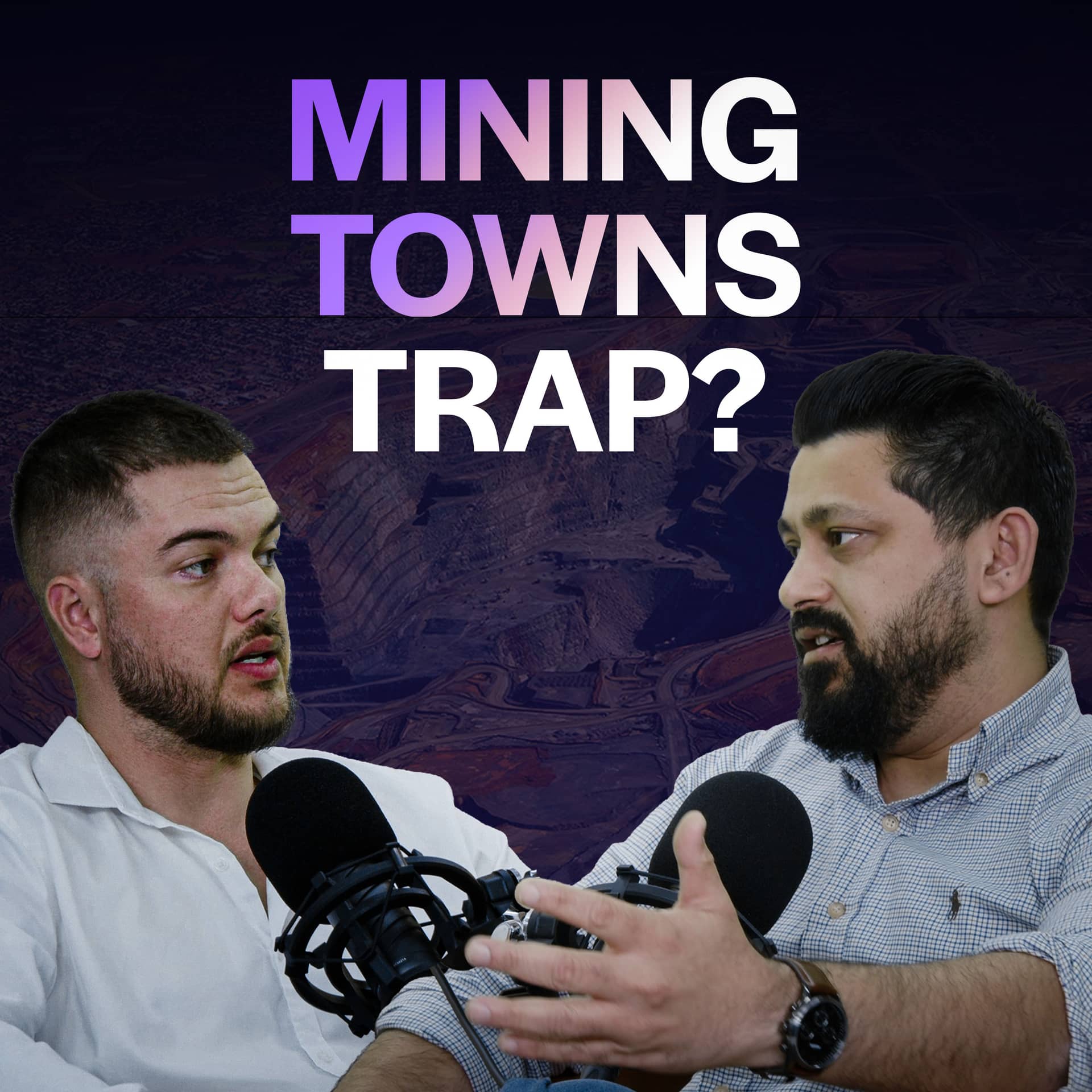
Episode 28
Mining towns can offer strong rental yields, with some areas showing 8% to 12% yield potential.
Lead Buyer's Agent
Building Inspector turned Buyers’ Agent | Expert in property condition, risk assessment, and smart purchasing.
ConnectListen on Spotify
Julius
Hello everyone. Today we have Raymond from Perth. He's the lead buyer agent with Prop Wealth. Had lots of experience working in mining towns. Raymond, can you share some experience about how you started and then what are the challenges there and all this stuff?
Raymond
No, definitely. Thanks for having me. I guess the question sort of came about because it's becoming increasingly more, I guess, a question on everyone's mind. You know, should we be invite? Should we be investing into mining towns?
Raymond
My personal experience is I spend quite a bit of time throughout, you know, the Bilbra and the Goldfields and that sort of stuff. So I've seen some of these towns, and I've seen, I've always been hesitant on it. So I guess today would be great to pick your brain a little bit and actually understand, you know, like what why should we be investing in here?
Julius
Okay, so when you are in your portfolio journey, right, you need to have a balanced portfolio. You need a lot of cash flows as well because you can't always bang on the properties which are generating very high capital growth. In mining town, you can see the yields are in between eight to 12% Also, of course, there are the risk of boom and bust traps, but still, the cash flow is the main incentive when you are getting into the mining towns. So, when you look at the mining towns hubs like WA and Queensland, like for an example Perth, or when you look at WA, these like Port Hedland, or when you go towards the Karatha, you see a lot of iron ore or gas. But when you go towards the Kalguliholder, it's specifically for the gold mining.
Raymond
I guess like like I mean, I've been to all these places, seen like these are massive operations and that sort of stuff. But my concern would always still, I guess, from an investment point of view or an advice point of view for clients is, you know, how do we pick these mining towns? What's the difference between, say, you know, Port Hedland or Caratha or Kalgoorlie and that sort of stuff? What what what's some of the Agis? I guess they're all mining towns. You know, they're all reliant on mining, but is there other factors that we should be considering?
Julius
Yeah, there are a lot of factors we look at because you can either go towards the smaller mining towns, or you can go towards the towns which are diversified in other employments also, because every mine has a different service selling life. So we don't know when it is going to be stopped. But okay, if there is no other employment rather than mining, then how do we sustain those property portfolios? So that's why it's very important to find out in which mining towns you are going. Either you are focusing only on the smaller mining towns, or you are you are getting into much more diversified mining towns.
Raymond
I guess like yeah, my understanding would then be to try and I guess understand where that commodity cycle is at the moment. You know, so if if we're looking at a mining town where maybe exploration is just starting, that there's nothing there. But once construction has commenced and production is kind of there, I guess that the focus would be to try and target those sort of mining towns.
Julius
Yeah, correct. So we need to understand where are we in that entire commodity cycle? So, for an example, when you look for iron ore versus the coal mining, iron ore is something where okay, there is like there are multiple type of minings we are talking about, right? So, iron ore versus coal, or you are getting into the critical minerals, or you are going towards the copper mining, or there is a lithium, so it always depends on okay where that entire commodity cycle is.
Raymond
I guess it's quite interesting you mentioned the type of commodities in terms of iron ore and and lithium. I guess if you compare that with coal, you know it is kind of sort of slowing down or it's declining. Whereas iron ore and lithium, you know everything's EV cars and that sort of stuff. So, I guess the type of commodity in that mine also plays a big role. Yeah, yeah, correct.
Julius
Because yeah, so because when you look at the coal specifically, there are a lot of government. Government is actually going towards the clean energy, so that's why they they try to stop all these coal injections in multiple places. So basically, we need to find out. Okay, are you getting into the mines where there is heavy dependence on the coal in that commodity cycle, or you are getting into the mining sections where okay, iron ore has lot of requirement now. When you look at the critical minerals, they're always there. Gold mines, they're always there. When you look at the lithium, now there are a lot of industries are going towards the batteries, like you need EVs and all those stuff. So that's why you need that lithium. So they are in in much earlier phase of their commodity cycle. So we need to find out how the commodity cycle and where that entire mineral is in that commodity cycle. Yep.
Raymond
So I guess like something that's interesting then is is when we're looking at I guess these mining towns, from from what you're saying, is the more infrastructure that they've built, the more I guess diversification there is. If there's a hospital or a school, then they're there for long term. You know, that's something that we want to sort of be looking at.
Julius
Correct. So when you look at the commodity cycle itself, look at the gold. So last year, W. Recorded 36 billion of gold sales in only in 2025. It's all time high. Yep. Versus iron ore, last year they have recorded around 126 billion dollars of iron ores production, which is all time high. Lithium just started, but still it's around 4.5 billion. So these are when you look at the gold, iron ore, lithium, they are in much earlier phase of their commodity cycle, versus when you look at the coal. Right, there are a lot of metallurgical coal volumes remain substantial through because government is trying to go towards the clean energy. So by 2031, you can see the coal production will be declining. So when you're looking at that commodity cycle, when you're looking at the markets where they are all dependent on, especially the Queensland market where there is a lot of dependence on the on the coal mining. If suppose if you're getting into the locations where entire town is dependent on a coal mining, and if it is declining, that means there is there'll be a long-term risk. So we need to find out, okay, exactly where are they? That's why it's very important to find out where are we in that cycle.
Raymond
Okay, I guess my my question on that would be then: is is it bad to to invest into those coal mining towns, or or does a bit of a I guess an exit strategy start to to become important there?
Julius
Yeah, correct. So when we look at the when you do the assessment of those, okay, where to invest versus what kind of location you need to pick up in terms of the job diversification or the infrastructure diversification, what we can see is basically yes, if suppose the entire town is dependent on single employment, which is a mine, it's bad. Or when you see when, or when you can see, okay, in next two years or three years that those mines are going to go away, or there is the government projections, okay, by 2031, they're going to decline. It's not great, but wherever you see, yes, there is a good demand, and they are into the early phases, and they are operational, which is good.
Raymond
Okay, I guess like from my time that I've spent there, you know, you look at some of these areas.
Raymond
So, for example, Kalgoorlie. You know, you you can purchase a property 300, $400,000, and the yields are you know 800, $900. You know, from my understanding, is a lot of these these higher rents stem from you know corporate leasing or or stuff like that, is that something that we should be, I guess, wary of? Is there a high risk of this when when we have it reliant? Like, is is there anything else that's driving these rents so high?
Julius
Okay, so when you look at the rental proportion, right? So rentals can be either because of the severe demand and supply gap. So because when when the five-four worker goes there, if there is no supply and higher demand, then they all the big companies or corporates they require a lot of houses to rent out, so they pay good rentals. Plus, there are a lot of corporate leases also available. So, whenever see if there is demand and supply gap, there is an instant requirement of the houses where you are sitting into a very remote location where you can't suddenly bump the supply of the houses. Versus to build the houses is very very expensive. Then it's easy to get the properties which are easily available there. So when you see in those area, you can see a lot of corporate leases for the long leases, where okay, only five four workers lives there. Company took this for they often take them for long leases. That's why they pay you good because they don't want to get into the headache of okay, I just want to build hundreds of camps or hundreds of houses. Yep. Yeah. So whenever we see the rents are always exceptionally high.
Raymond
Because I guess from my point of view, you know, I look at it. I've lived there. I probably don't want to. Sometimes, from my perspective, I don't necessarily want to live there. So it doesn't, I guess, appeal to me. However, when you're sort of going through these factors and you're explaining to it, it's going to be a continuous cycle. I might not want to live there necessarily, but people do. People do want to live there. People do want to work there, and I guess identifying certain mining towns by the sounds of it, where we have a bit of diversification, there is a little bit of you know owner occupiers having sort of located there a slightly higher population. Then mining towns should be probably looked at a little bit closer.
Julius
Yeah, correct. Because when you look at the Calgary Boulder, right, so probably around 20,000 people, three or four sections. We have Somersville, which is the highest owner-occupier ratio, good socioeconomy. Prices are also great. Then you have Kalgurlie, South Kalgurli, Boulder, South Boulder. More you go towards the South Boulder, probably you have more impact of the mining. Yep. But when you go towards the Somersville or Boulder or Kalgurlie, yes, that there is a good owner-occupier ratio. But when we talk about the rents, right? Rents are there because there is a requirement. There is a requirement because that those worker has to be there. That's why we can see there is exceptionally high rental pressure.
Raymond
Okay, so again, the commodity cycle becomes relevant then.
Julius
Correct,
Raymond
that makes sense. Okay, but then, for me as an investor, I just want to play devil's advocate here. Yeah. Okay. So as an investor, the the I guess there's some operational challenges that we're going to face. Okay. So property management, maintenance costs, you know, and then in certain these areas, like I mean, I worked in Port Adeline. I know that there is, you know, cyclones and and adverse storms and that sort of stuff that go through it. How should we, as as investors, if we are considering these mining towns, is there mitigation strategies? Because I mean, for a very long time, people have said, do not sort of, you know, invest into mining towns. You know, I know that there's slight diversification which we want to look at, but is there any other sort of mitigation strategies that that we we should be considering?
Julius
Yeah. So when you look at the rentals, right? First of all, yes, you will have always a local operational challenges, right? Like property management is expensive because there are not a lot of property managers available. That is number one. Number two is basically, it's a remote town, so your maintenance cost is higher. Even a gate rates to fix something, there'll be call out charges. Sometimes those trades will not be available, so they have to drive from bigger places. Exactly. So it's too expensive to maintain. As you said correctly, in Port Hedland, you can have a cyclone risk, or sometimes these locations are too remote that the insurance premium from the banks are very high, yes. But when you select those locations, right? We look at okay, how what kind of supply chain infrastructure is there? Like, do they have a heavy rail networks? Do they have a deep water ports? Do do they have airports around? Then we look at okay, what are the social facilities like? Okay, hospitals, infrastructure, good school infrastructure. If it is there, that means they are there for a longer time, because when you invest billion dollar in heavy rail networks or the or airframe infrastructure or when you look at the deep water infrastructure, they are expensive infrastructure to build. If they are there, that means yes, they are good. Like yeah, you have a good supply chain infrastructure. Also, you have all these amenities around it to serve the current population. Also, that is good. But sometimes when you see okay, there are government initiative or federal initiative to decarbonization fundings, then it's not great. So few things to look at. It okay, yes, you have challenges, but yes, supply chain infrastructure is good. There is a diversification in employment, and if they have good facilities around like hospitals, schools, all these infrastructure good. But when you say okay, government is trying to get into points where okay, by 2031, they would be going into the green energies, then that's not great. Yep,
Raymond
you know, like you've given me quite a bit of, I guess, perspective on that because you know, looking at it now is we don't necessarily need to have job diversification there. We just need to see that there is sufficient infrastructure that supports the mind being there for a long time.
Speaker 1
Yes,
Raymond
in order to make it worth it. So then, I guess my follow-up question for you would be: What sort of investor would this sort of be typically targeted at? You know. So I guess we're mitigating the risk by looking at areas that have you know long-term outlook on it. So so that it's sustainable. Okay, because we're just looking for sustainability by the sounds of it, you know, mining towns are not necessarily bad, but as long as it has sustainability, so what sort of I guess investor does this suit?
Julius
Okay, so there are few primary risks, right? The first risk is basically employment diversification. That means the entire town is dependent on single employment, so that is something which is not great. Second is basically if suppose there is mining and they okay they think okay they can run this operation for another 50 years, so they can set up a big camps, and suddenly there'll be a very less demand for the local properties. That can happen. Third is basically it depends on where you are buying versus where you are buying a property, you need to assess that location in terms of the banking policies, because there are locations where okay, yes, you can see a good cash flows, you can see yes, properties are cheaper, but when you buy a property, you need to know how much deposit do you have. There are certain lending restrictions for from the bank for smaller towns where okay they can only lend 65% then you need to have that 35% of the deposits as well. So these are like a few primary risks, but they are mitigation strategies as well.
Julius
So like when you look for locations, then look for a location where you have a diversified employment. It's like multi-industry hub locations. Then, when you look for the cash flows, right? Just don't look at the gross income. Look at the net. So basically, if your net rental income is matching with around six to 7% not the gross, then that's good. That means you'll have, you'll have. That means your mortgage payment will be taken. By your rental income. Third thing is basically try to secure a strong leases, like corporate leases, because they were there for the longer time, and then you have a good tenants. They'll take care of the property, and then when you select the location, try to select a location where at least there are two or three major employments, not just a mining. And most important is your exist strategy.
Raymond
I mean, looking at some of the data, you know, I'm local to Western Australia. We operate there. There's multiple locations that have popped up in in recent time. You know, you look at the data, you follow it. Everything is pointing to these, but you're hesitant because at the end of the day, it's a mining town. Okay, and and I guess from my understanding through this conversation is yes, okay, the data factors look good. We're not necessarily chasing the capital appreciation for this. We're we're chasing the yields, okay. So yeah, I guess for a a client of ours or or or an investor, we would look at sort of trying to balance the portfolio with something like this, you know, chasing the high, the the the cash. Oh, sorry, the capital growth would be a byproduct of it. But we just we're chasing that. I guess mining towns have a place. You know that these data factors do look good as long as there's sustainability there and all that sort of stuff. Then it means that you know it can balance a portfolio by by assisting you with with your cash flow,
Julius
correct. So the idea should be we should buy here, right? So I believe when you start your journey, what every investor wants is basically you build upon your equity. That means your equity extraction time is much faster. If you are, but if you are a big size investor where you have multiple properties now, you need to have a good cash flow to sustain that portfolio. Also, so if you are in your investment journey and if you have seven, 810, properties, then you need to have properties which will generate a good cash flow. These are the right location for them because yes, you have two or three such properties in a different mining location which are diversified, which are good, where you can generate at least 7% to 8% yields in net. Then yes, it's good for you. But in a case, if you are just beginner, you're just starting your investment journey, and your expectations are you want to withdraw that equity in next one to two years, then probably it's not great for the early investors.
Raymond
I mean, just thinking out loud now as you were talking. I guess as a strategy that it comes down to. So, for example, if I'm buying a property for $700,000, I know that the capital appreciation is there. I know it's going to do really well, but it might be a little bit sort of cash flow negative. Buying something like this with a perfect exit strategy, understanding that okay, in five years' time, property A is going to be you know neutrally geared.
Raymond
This can very much well balance that out for me, and I'll be able to sustain both properties. I still get capital growth, and I still have the cash flow to manage these two properties. So you know, it's quite interesting that mining towns have all of a sudden now found its place.
Julius
Yeah, correct. They found the place. So, what do you think? Like, how do you trade those? Or what are your thoughts? Like, while you're buying those properties,
Raymond
I mean, I guess it's for it's the same as every investor. You know, you're going to have to ask yourself a series of questions in order to understand whether or not. Like, this whole talk has been very interesting, and I guess getting a different perspective. I've been there, I've worked there, I've looked at the data. Some of the data points to it, you know. But you're still hesitant, okay? But I guess it comes down to strategy first. Understanding that this is not something that you're buying for capital appreciation. You're doing it to help you, you know, sustain your pro your property portfolio. Because I mean, everyone's well aware of all these tax changes that's happened and and all that sort of stuff. So adding something like this to your portfolio is just balancing it, okay. And I think that for me, there'll be quite a few questions that I would I guess want to ask myself before going. You know, what commodity is driving it? We touched on iron ore being sustainable, you know, but coal not being so that'll be an important thing. Things like where is it in the commodity cycle, you know, are they exploring it, or they phasing it out? What's sort of happening, you know, how many mines or major employment centers there are? Is there a rail line? Is there a hospital? Is there a little bit more sustainability there? And then, of course, you know, what's the lifetime of it? If I've got an exit strategy of say five years time, I want to know that there's a few decades left of the mine. There, it doesn't matter if I'm going to get you know crazy capital depreciation, but at least I know for the five years that I need that cash flow. It's fine. You know, it's not an issue. And then I think, you know, what sort of infrastructure exists outside of that, again, I asked you, you know, earlier, you know, all these towns that we've kind of touched on, that they're relying on mining, but having that supporting infrastructure there, or at least owner occupiers being there, you know, is that sort of sustainability around it? And then I guess if my concern would be, or a question that I would want to ask. Myself, if the mining was to say stop tomorrow, you know, is there going to be a drastic drop in my rent, and am I going to be able to sort of mitigate that? But again, if we're looking at infrastructure that's there, hospitals, you know, train lines, and that sort of stuff, it's not like that will happen overnight.
Julius
Yeah, yeah, that that's right. So that means the better question isn't which mining town has the highest yield? It's like which town has the strongest reason to still be thriving after the correct commodity cycle ends. This is where the long-term property investment discussion becomes much more interesting.
Raymond
That's very interesting, Julius. I think that yeah, different perspective, understanding that it's it's more strategy based than chasing capital appreciation. All of a sudden, there's a place for them.
Julius
That's right. It's
Raymond
very very good.
Julius
Yeah. Thank you so much, Raymond.
Raymond
Thanks. Thanks for having me. This was definitely it's prompted a few questions.
Julius
Yeah. Thank you.

Suburbs
Listen for practical Australian property insights and clear strategies for your next decision.

Suburbs
Listen for practical Australian property insights and clear strategies for your next decision.

Investment
Listen for practical Australian property insights and clear strategies for your next decision.
Have a property question, market concern or investment idea? Send it directly to the team—it could inspire an upcoming episode.